这3个常见习惯,正在压垮你的肝脏!4个症状千万别忽视
- 生活健康
- 合理膳食
- 戒烟限酒
- 疾病科普
- 慢性病
- 科普荟萃
发布日期:2026-02-06
-
收藏
生成分享海报
长按二维码
查看详情
点击保存图片
关闭
分享到:
生成分享海报
长按二维码
查看详情
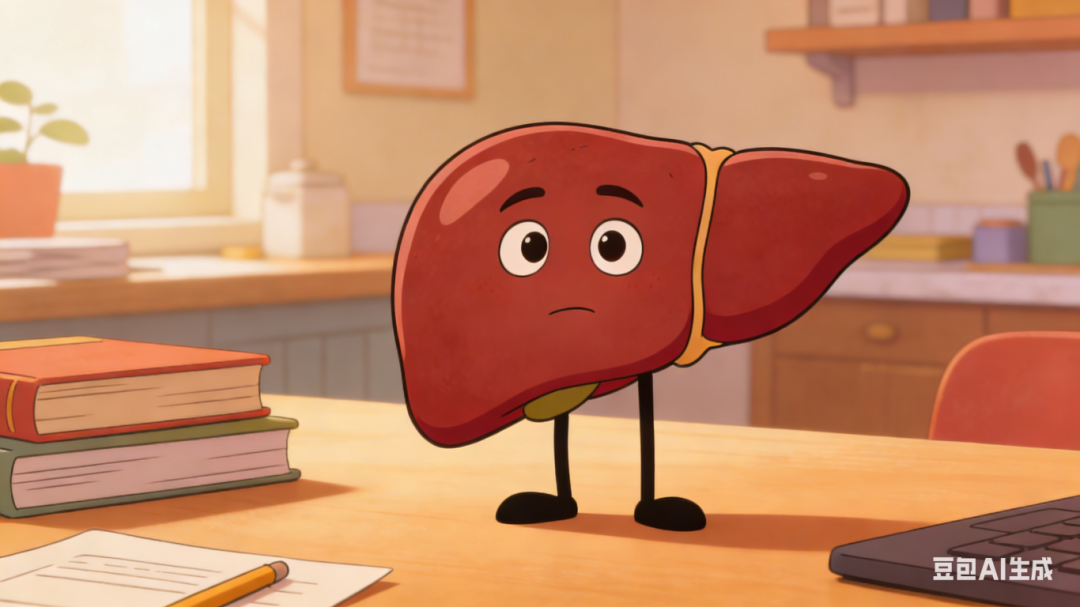
肝脏
是你身体里最任劳任怨的“超级工厂”
它每天参与人体几乎所有重要的代谢过程
负责解毒、代谢、储存营养、合成蛋白质
……
然而
这个强大的器官却没有痛觉神经
当它真正发出求救信号时
往往已经不是小问题了
别等“出事”才重视
也别慢慢消耗肝脏健康

这3个常见习惯
正在悄悄压垮肝脏
频繁饮酒,哪怕“只是少量”
酒精(乙醇)主要在肝脏代谢,其代谢过程中会产生乙醛。而乙醇本身及其代谢产物乙醛,均被国际癌症研究机构(IARC)列为1类致癌物[1]。
研究发现,即使每日饮酒量控制在《中国居民膳食指南(2022)》建议的15克纯酒精以内(≈450mL啤酒/150mL葡萄酒/50mL38°白酒),因肝病死亡的风险仍会升高[2,3]。
正因如此,“少量饮酒更安全”的认知其实存在误区。长期、低量、持续饮酒,实则会让肝脏反复超负荷运转,逐步引发:脂肪肝 → 酒精性肝炎 → 肝纤维化 → 肝硬化 → 肝癌[4]。
世界卫生组织(WHO)在2023年明确强调:“酒精的安全摄入量为零” [5]。换句话说,对肝脏而言,最好的保护,就是不喝。

高热量、高果糖、高脂饮食
我国成人代谢相关脂肪性肝病(MASLD)患病率高达29.2%,其中20~39岁年轻人也占27.2%[6]。
实际上,高热量、高果糖、高脂的饮食习惯是引起代谢相关脂肪性肝病的重要原因[7]。
研究显示:每周吃快餐≥3次,代谢相关脂肪性肝病风险增加39%;每天喝150~200mL含糖饮料(约一杯奶茶),风险飙升50%[8,9]。
高脂饮食会扰乱脂质代谢,而高果糖本身就容易诱发脂肪肝——它主要在肝脏中被快速转化为甘油三酯,直接促进脂肪堆积。久而久之,肝细胞因脂质过载而肿胀,引发炎症反应和氧化应激加剧,进而可能发展为非酒精性脂肪性肝炎,甚至肝纤维化[10–12]。

长期久坐,不动就是“慢性伤肝”
每天久坐超过8小时,代谢相关脂肪性肝病风险增加44%[13,14],即使体重正常、偶尔运动也难逃影响[13,15]。
久坐导致能量消耗下降,血液中的脂肪酸和葡萄糖无法及时利用,转而沉积于肝脏;同时肌肉活动不足会降低胰岛素敏感性,诱发慢性炎症,进一步加重肝损伤[16,17]。

肝脏不会喊疼
4个症状别忽视
早期肝损伤常“无声无息”
若出现以下表现,请务必警惕
看面色和排泄
皮肤或眼白发黄、尿色深如浓茶。这是黄疸的典型表现,说明肝细胞受损,无法正常处理胆红素,导致其在血液中堆积。
看食欲和消化
食欲下降、厌油、饭后腹胀、频繁恶心。肝脏分泌胆汁减少,脂肪消化受阻,身体本能地“抗拒”油腻食物。
看身体疼痛
右上腹(肋骨下方)持续隐痛或按压不适,可能伴随饱胀感加重,提示肝脏肿大或存在炎症。

看出血和愈合
牙龈出血、皮肤易现瘀斑、小伤口难愈合。肝脏合成凝血因子的能力下降,止血功能随之减弱[12,18]。
切勿等到症状明显才就医
早期干预是逆转肝损伤的关键
护肝饮食有讲究
这4类食物值得常吃
绿叶蔬菜:如菠菜、芹菜、油麦菜、西兰花、羽衣甘蓝等,每日300g以上,清炒、白灼为佳,少盐少油。
菌菇类:香菇、木耳、金针菇、杏鲍菇等,每周吃3~4次,简单烹煮即可。
优质蛋白:鸡蛋、牛奶、鱼肉、瘦肉、豆制品等,每日均衡摄入,如1个鸡蛋、1杯牛奶/酸奶、一掌心的鱼肉或瘦肉。
新鲜水果:蓝莓、葡萄、橙子、苹果等,每天摄入200~350克(约一个苹果加一把蓝莓),避免喝果汁[19-21]。

特别提醒
严格避免霉变食物(含强致癌物黄曲霉素)
尽量少吃深加工食品、高糖零食和含糖饮料
坚持这3件事
护肝真的有用
规律运动:给肝脏“减负”
运动可促进脂肪分解、改善胰岛素抵抗、抑制肝脏炎症与氧化应激[22]。每周至少150分钟中等强度有氧运动(如快走、游泳、骑行),每次30分钟,每周5次。注意循序渐进,长期坚持。

规律作息:让肝脏“修复”
肝脏的代谢和修复与生物节律密切相关[23]。尽量避免长期熬夜,23点前入睡,保证7~8小时高质量睡眠,让肝脏拥有自我修复时间。

定期体检:早发现早干预
普通人群:年度体检应包含肝功能和腹部B超;
高危人群(如长期饮酒者、肥胖/糖尿病患者、乙肝携带者、肝病家族史等):建议每6个月专项筛查,必要时加做肝脏弹性检测或肝纤维化扫描[24,25]。
肝脏从不抱怨
却承担着生命运转的重担
远离伤肝习惯,识别沉默信号
用科学饮食与生活方式守护它
最好的“护肝药”,不在药瓶里
而在于你每一天的选择
参考文献 :
[1] INTERNATIONAL AGENCY FOR RESEARCH ON CANCER.Alcohol Consumption and Ethyl Carbamate [M]. Lyon: IARC Press, 2010. (IARC Monographs on the Evaluation of Carcinogenic Risks to Humans, Vol. 96).
[2] Askgaard G, Grønbæk M, Kjær M S, et al. Alcohol drinking pattern and risk of alcoholic liver cirrhosis: A prospective cohort study[J]. Journal of Hepatology, 2015, 62(5): 1061-1067.
[3] Millwood I Y, Im P K, Bennett D, et al. Alcohol intake and cause-specific mortality: Conventional and genetic evidence in a prospective cohort study of 512 000 adults in China[J]. The Lancet Public Health, 2023, 8(12): e956-e967.
[4] LEE B P, WITKIEWITZ K, MELLINGER J, et al. Designing clinical trials to address alcohol use and alcohol-associated liver disease: An expert panel consensus statement[J]. Nature Reviews Gastroenterology & Hepatology, 2024, 21(9): 626–645. (Published online December 2023).
[5] World Health Organization. No level of alcohol consumption is safe for our health[EB/OL]. (2023-01-04)[2026-01-28]. https://www.who.int/europe/news/item/04-01-2023-no-level-of-alcohol-consumption-is-safe-for-our-health.
[6] Zhou F, Zhou J, Wang W, et al. Unexpected rapid increase in the burden of NAFLD in China from 2008 to 2018: A systematic review and meta-analysis[J]. Hepatology, 2019, 70(4): 1119-1133.
[7] McCarthy E M, Rinella M E. The role of diet and nutrient composition in nonalcoholic fatty liver disease[J]. Journal of the Academy of Nutrition and Dietetics, 2012, 112(3): 401-409.
[8] Huang X H, Peng H W, Huang J R, et al. Association of food intake with a risk of metabolic dysfunction-associated fatty liver disease: A cross-sectional study[J]. Gastroenterology Report, 2023, 11: goad054.
[9] Chen H, Wang J, Li Z, et al. Consumption of sugar-sweetened beverages has a dose-dependent effect on the risk of non-alcoholic fatty liver disease: An updated systematic review and dose-response meta-analysis[J]. International Journal of Environmental Research and Public Health, 2019, 16(12),2151
[10] Rinella, M. E., & Sanyal, A. J. (2023). Metabolic dysfunction–associated steatotic liver disease: a global perspective. Nature Reviews Gastroenterology & Hepatology, 20(6), 351–367.DOI: 10.1038/s41575-023-00779-1
[11] Jensen, T., et al. (2018). Fructose and sugar: A major mediator of non-alcoholic fatty liver disease. Journal of Hepatology, 68(5), 1063–1075.DOI: 10.1016/j.jhep.2018.01.019
[12] Friedman, S. L., et al. (2018). Mechanisms of hepatic fibrogenesis. Gastroenterology, 154(7), 1951–1968.
[13] Kim D, Vazquez-Montesino L M, Li A A, et al. Inadequate physical activity and sedentary behavior are independent predictors of nonalcoholic fatty liver disease[J]. Hepatology, 2020, 72(5): 1556-1568.
[14] Kim D, Konyn P, Cholankeril G, et al. Physical activity is associated with nonalcoholic fatty liver disease and significant fibrosis measured by FibroScan[J]. Clinical Gastroenterology and Hepatology, 2022, 20(6): e1438-e1455.
[15] Ge X, Wang X, Yan Y, et al. Behavioural activity pattern, genetic factors, and the risk of nonalcoholic fatty liver disease: A prospective study in the UK Biobank[J]. Liver International, 2023, 43(6): 1287-1297.
[16] ESLAM M, NEWSOME P N, SARIN S K, et al. A global consensus statement on metabolic dysfunction–associated fatty liver disease[J]. Nature Reviews Gastroenterology & Hepatology, 2024, 21(10): 633-653.
[17] ROCKEY D C, BELL P D, HILL J A. Gastrointestinal and hepatic manifestations of liver disease[J]. New England Journal of Medicine, 2015, 372(15): 1441-1451.
[18] TRIPEDI A, MANNUCCI P M. The coagulopathy of chronic liver disease[J]. New England Journal of Medicine, 2011, 365(2): 147-156.
[19] Zhao S, Zhang S, Zhang W, et al. First demonstration of protective effects of purified mushroom polysaccharide-peptides against fatty liver injury and the mechanisms involved[J]. Scientific Reports, 2019, 9(1): 13725.
[20] Zhao L, Jin L, Petrick J L, et al. Specific botanical groups of fruit and vegetable consumption and liver cancer and chronic liver disease mortality: A prospective cohort study[J]. The American Journal of Clinical Nutrition, 2023, 117(2): 278-285.
[21] Markova M, Pivovarova O, Hornemann S, 等. Isocaloric diets high in animal or plant protein reduce liver fat and inflammation in individuals with type 2 diabetes[J]. Gastroenterology, 2017, 152(3): 571-585.e8.
[22] Eslam M, Newsome P N, Sarin S K, et al.A global consensus statement on metabolic dysfunction–associated fatty liver disease.Nature Reviews Gastroenterology & Hepatology, 2024, 21(10): 633–653.
[23] Wang W, Zhuang Z, Song Z, et al. Sleep patterns, genetic predisposition, and risk of chronic liver disease: A prospective study of 408,560 UK biobank participants[J]. Journal of Affective Disorders, 2024, 352: 229-236.
[24] 中国中西医结合学会消化系统疾病专业委员会. 非酒精性脂肪性肝病中西医结合诊疗专家共识(2025年)[EB/OL]. (2025-04-15)[2026-01-28]. https://lcgdbzz.org/custom/news/id/2228dfae-e36f-496e-810d-15569871eb2a.
[25] 代谢相关脂肪性肝病基层诊疗与管理指南(2025年)[EB/OL]. https://www.lcgdbzz.org/custom/news/id/261398ad-b03b-4085-aae5-3836623b5d30.
作者:
作品来源:广东疾控
版权声明:转载请注明来源,未经许可不得对作品进行二次创作。



微信公众号

微信视频号

新浪微博